


Understanding Louisiana Tuna Regulations: 2024 Size and Bag Limits Explained
Hooked on Louisiana Tuna? Don’t Let Regulations Spoil Your Trip.
There’s no feeling on earth like it. The reel screams, the line peels off at a blistering pace, and you set the hook into a freight train with fins. You’re locked in a battle with a giant Yellowfin Tuna, a true titan of the Gulf of Mexico. The adrenaline, the power, the raw struggle—this is what offshore fishing in Venice, LA, is all about.
But that pure adrenaline can turn to a gut-wrenching anxiety in a hurry. Federal waters, state waters, bag limits, size limits, curved fork length… the rulebook can feel more complicated than a Tulane playbook. Mess it up, and you’re looking at hefty fines and a ruined trip.
That’s where I come in. My name is Captain Troy Wetzel. For over 20 years, I’ve been putting clients on monster fish in the Gulf. I don’t just know these waters; I dominate them. Holding state and world records isn’t a hobby for me—it’s the standard. My goal on every single charter is to catch the most fish and the largest fish, period. This guide is your no-nonsense breakdown of the 2024 Louisiana tuna regulations. I’ll cut through the government jargon so you can focus on one thing: fighting the fish of a lifetime.
Key Takeaways
- Yellowfin Tuna: The daily bag limit is 3 per person. The minimum size is a strict 27-inch curved fork length (CFL).
- Blackfin Tuna: There is currently no federal size or bag limit, but state water rules can apply, making a knowledgeable guide essential to stay legal.
- Bluefin Tuna: This is a giant you fight for the glory, not the grill. Bluefin are heavily regulated and, for most charters, are a catch-and-release-only fishery.
- The Captain Makes the Difference: Fishing with an expert like me means you don’t worry about permits, measurements, or rule changes. You just show up ready for a fight, and I handle the rest to maximize your legal limit with trophy-class fish.
The Official 2024 Louisiana Tuna Regulations (The Simple Version)
First, let’s get this straight: these regulations are for recreational fishing and they can change. Federal agencies sometimes adjust seasons or limits with little warning. That’s why going out on one of my offshore fishing charters is your best bet. I’m on the water daily, and I live and breathe these rules. You won’t have to guess if you’re legal—I guarantee it.
Yellowfin Tuna: The Prize of the Gulf
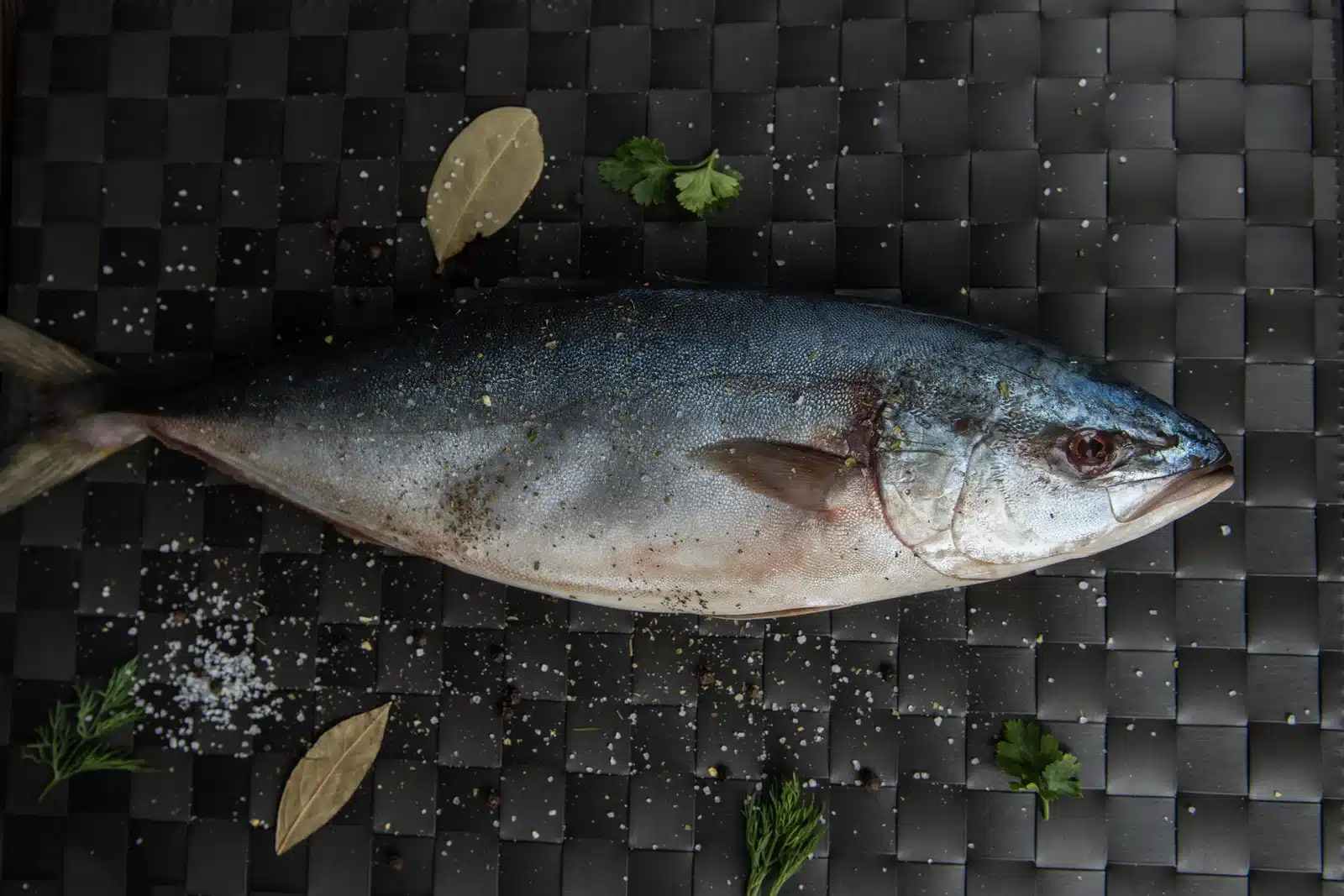
This is the fish that brings anglers from all over the world to Venice, Louisiana. They’re powerful, they’re beautiful, and they taste incredible. But you can’t just keep everything you hook.
- Current Bag Limit: 3 per person, per day.
- Current Minimum Size Limit: 27” curved fork length (CFL).
What is “curved fork length?” It’s a measurement from the tip of the fish’s jaw to the fork of its tail, measured along the natural curve of the body. It’s not a straight line. Getting this wrong can be a costly mistake, but on my boat, it’s something you’ll never have to worry about.
Captain’s Insight: The 27-inch limit is there for a reason—it protects the younger fish and ensures we have a healthy fishery for generations. But let’s be honest, we’re not out here hunting for 27-inch “just legal” fish. We’re here for the monsters. My experience and top-of-the-line gear are dialed in to target the 100, 150, and even 200+ pound giants that make catching Yellowfin Tuna an art. We’re not just trying to meet the minimum; we’re trying to break records.
Blackfin Tuna: Action-Packed and Delicious
Blackfin are the unsung heroes of a tuna trip. They fight hard, they often show up in huge numbers, and they’re fantastic on the grill. The regulations for them are a little different.
- Current Bag Limit: No federal bag limit.
- Current Minimum Size Limit: No federal size limit.
This is a key area where an expert guide is crucial. While federal waters (generally beyond 3 nautical miles) have no limit, Louisiana state waters do have their own rules. Knowing exactly where you are and what rules apply is part of my job.
Captain’s Insight: Just because you can keep a bunch doesn’t mean you’ll find them. The real skill is locating the schools of bigger “football” Blackfin. Anyone can stumble into a school of tiny ones. I know the spots where the big ones feed, turning a good day of catching into an epic day of filling the fish box with quality meat.
Bluefin Tuna: The Regulated Giant (Catch and Release)
Hooking a Bluefin Tuna in the Gulf of Mexico is like tying your line to a sports car. They are, without a doubt, the kings of the tuna world. They are also heavily protected.
- Current Bag Limit: The recreational fishery is governed by a federal HMS Angling category permit and is almost always closed for retention. For 99.9% of trips, this is a strict catch-and-release fishery.
- Current Minimum Size Limit: Varies by permit and season, but again, assume catch and release.
Captain’s Insight: Don’t let “catch and release” fool you. This is one of the ultimate sportfishing challenges on the planet. Safely hooking, fighting, and releasing a 500+ pound sea monster requires immense skill, the right boat, and heavy-duty tackle. It’s a testament to an angler’s and a captain’s ability. We take every precaution to handle these magnificent fish with respect, ensuring a healthy release. It’s a chance to battle a true giant, get the picture of a lifetime, and watch it swim away strong. You can learn more about the key differences between these brutes in my Bluefin vs. Yellowfin Tuna guide.
Beyond the Rulebook: Why Fishing with a Pro Like Captain Troy Matters
You’ve read the rules. Now, let’s talk about winning the game. Knowing the regulations is just the entry fee. Success in the deep waters of the Gulf is about execution, experience, and an absolute refusal to fail.
Maximizing Your Legal Limit
Knowing your limit is 3 Yellowfin is one thing. Having the skill to actually find and land three trophy-class Yellowfin is something else entirely. That’s the difference between a boat ride and a world-class fishing charter. With my 20+ years of experience, I know the rigs, the ledges, and the temperature breaks that hold the biggest fish. My goal isn’t just to get you your limit; it’s to make sure your limit consists of fish you’ll be bragging about for years. I’m obsessed with it. It’s what has allowed me and my clients to set state and world records right from the deck of my boat.
No Guesswork, Just Fishing
When you step on my 39′ Contender, your only job is to be ready for the fight. You don’t have to worry about a single piece of paperwork or regulation.
With me, you don’t stress about:
- Having the right federal HMS permits.
- Carrying your own fishing license (my charter license covers everyone on board).
- Measuring fish correctly.
- Staying updated on last-minute regulation changes.
- Knowing the difference between federal and state water rules.
I handle all of it. My passion is putting people on fish, and I’ve streamlined the entire process so you can share in that passion without any of the headaches. You just show up and fish.
The Gear and Experience to Land a Record-Breaker
Hooking a 150-pound tuna is only half the battle. Landing it is another story. These fish will exploit any weakness in your gear or technique. My boat is rigged with the best reels, lines, and tackle money can buy, all meticulously maintained. More importantly, I provide the coaching and expert guidance needed to keep you on that fish and get it to the boat. This isn’t just a job for me; it’s a relentless pursuit of the next giant. I bring that same intensity to every single charter.
Ready to Stop Worrying About Rules and Start Fighting Monster Tuna?
You can spend your time reading rulebooks, or you can spend it with a bent rod and a screaming reel. The choice is simple. A trip with me is more than just a tuna fishing charter; it’s a full-throttle offshore assault on the biggest and baddest fish in the Gulf of Mexico.
Let me handle the regulations while you handle the rod. Let’s go make some memories and fill the freezer.
Book Your Louisiana Tuna Charter Now
Have questions? Call me directly at (504) 235-1351 to plan your trip of a lifetime.